 IE Business Daily Business news for the Inland Empire.

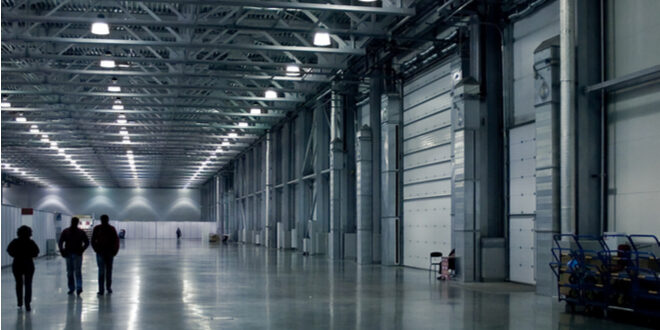
Who says the Inland Empire industrial market is struggling?
In the large industrial lease category, the Inland region appears to be performing fine, according to CBRE.
Of the top 100 industrial leases of one million square feet or more recorded nationwide during the first half of 2025, 14 were in the Inland Empire, the most of any major metropolitan area, CBRE reported recently.
The Inland Empire outperformed other large industrial markets in the major industrial lease category by a substantial amount: the PA I-78/I-81 Corridor had nine leases of one million square feet or more. Dallas-Fort Worth and Columbus, Ohio, recorded seven each while Charlotte, N.C, and Memphis recorded four each.
All of those markets are home to hundreds of warehouse-distribution operations and are considered major transportation centers.
Third-party logistics leases dominated the large-lease category during the first six months of this year, with 38 transactions, followed by general retail-wholesale with 28 lease signings. Automobiles and accessories and food and beverage had eight each.
Third-party companies are popular because they give companies a chance to focus on their core business, rather than having to manage complicated supply lines.
Half of the Inland region’s large industrial leases were renewals, a good sign because it shows companies still have confidence in the Inland Empire despite some of the problems it has faced recently.
Combined, those renewed Inland leases cover nearly 10 million square feet.
The Inland Empire also recorded the most industrial leases of one million square feet or more during the first half of 2024, an indication that the local market is performing consistently in that category, according to Dallas-based CBRE.
But as the last four months of 2025 gets under way, the Inland Empire industrial market is underperforming compared with the past few years. Jolted in April by the Trump Administration’s “Liberation Day” tariffs and some shifts in trade policy, the Inland industrial market was a blend of “mixed indicators” during the second quarter, according to CBRE.
“Make no mistake, there are still strong headwinds that the Inland Empire industrial market is facing,” said Ian Britton, senior managing director of CBRE’s Ontario office. “But I think we’re seeing a moment right now much like what we saw in 2011-2012. That was the start of a robust 10-year expansion.”
Industrial vacancy in the second quarter was 6.7 percent; a modest increase compared with the first quarter. The east end recorded a nine percent vacancy rate, the west ends a 4.8 percent vacancy rate, both quarter-over-quarter increases.
Approximately 1.5 million square feet of industrial space was absorbed in Riverside and San Bernardino counties during the second quarter, despite 740,000 square feet of negative absorption in the Inland Empire Core, generally defined Riverside and San Bernardino and their nearby surrounding areas.
Approximately 12.1 million square feet of industrial space was leased during the second quarter, with virtually all of that – 11.1 million square feet – happening in the Core communities. Leasing was strongest among buildings 500,000 square feet and larger, but structures at the other end of the spectrum – 10,000 to 30,000 square feet – also put up solid numbers, according to CBRE.
Ten point five million square feet of industrial space was under construction in the Inland Empire during the second quarter, more than the amount built during the first quarter. Three build-to-suit projects that combined will cover 4.5 million square feet broke ground during that time.
No speculative projects were reported.
The average lease rate was $1.07 during the second the second quarter, a modest decline from the first quarter. Lease rates in the Inland Core fell five cents, a 4.5 percent drop quarter-over-quarter, CBRE reported.
July was one of the busiest months in the 117-year history of the Port of Los Angeles, but that was because a lot of businesses were pushing their inventories out as quickly as they could in anticipation of the tariffs.
CBRE expects to see fewer construction starts in the Inland region between now and the end of the year, with e-commerce driving most of the growth, which has been the case for several years.
“We expect to see modest growth,” Britton said. “Right now, there’s too much uncertainty to expect much activity, and we don’t think that will change.”
CBRE’s second-quarter analysis was a little more optimistic.
“With retail and third-party logistics users making up the lion’s share of occupiers in the Inland Empire, investors, landlords, and occupiers watch closely as the tariff conversation evolves,” the report states. “Despite the temporary uncertainty, the underlying fundamentals of the market remain solid as, a plentiful workforce, access to markets, and proximity to the largest port complex in the United States drives attention to the Inland Empire.”
Smaller industrial properties in the Inland region – 10,000 to 25,000 square feet – could have an eight to 10 percent vacancy rate by the end of the year, said Rick Lazar, senior vice president with Lee & Associates Redlands.
“You’re going to see more incentives to get deals closed,” said Lazar, who works with office and industrial properties. That could mean free rent, or reduced rent, or more tenant improvements. A combination of those things is likely to happen.”
Like CBRE, Lazar is not enthusiastic about the current state of the Inland industrial market.
“I think the vacancies and the availability rates are way too high,” Lazar said. “It’s true that eight percent vacancy is not a big number, but when the market was at its peak, in 2022, the vacancy rate was one and a half to two and a half percent. So, we have a very different market now. It’s a slow market, and I expect that it will remain slow.”
