 IE Business Daily Business news for the Inland Empire.

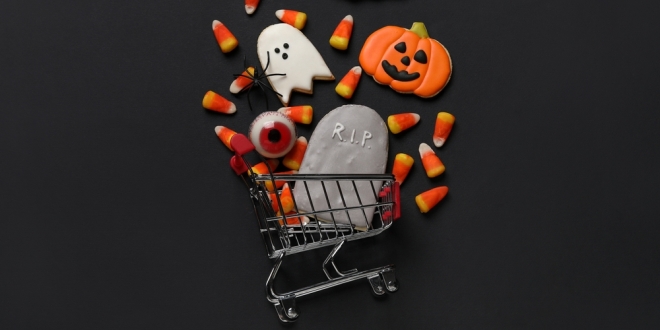
Despite inflation, record-high fuel prices and declining consumer confidence, Halloween spending is expected to reach record levels in 2026.
U.S. consumers are likely to spend $13.5 billion on candy, costumes, decorations and other artifacts, up from the record $13.1 billion spent last year, according to the National Retail Federation.
But that forecast, based on data gathered by Prosper Insight and Analytics in Worthington, Ohio, also found that consumers plan to approach their Halloween shopping more cautiously than they have in recent years.
“Consumers continue to make Halloween a spending priority, but they are also approaching the season with affordability in mind,” said Allison Zeller, the federation’s vice president of Industry and consumer insight, in the statement. “This year’s (study) show that shoppers are being thoughtful and strategic, looking for ways to maximize value throughout the season.”
Retailers are offering a wider-than-normal selection of products at various prices, hoping to make it easier for consumers to find items that fit their budget, Zeller said.
This year’s survey shows no signs of Halloween spending slowing down because of higher gas prices – national average $4.46 per gallon — or the 3.4 percent rise in inflation between August 2025 and August 2026 reported recently by the U.S., Bureau of Labor Statistics.
Forty nine percent of those questioned said they were going to start their Halloween shopping in September or earlier, about the same percentage as one year ago. That number has grown 15 percent during the past decade, an indication that Halloween has become a season, not just the one-day event that it was for years.
Twenty three percent of those who shopped early said they did so to make things easier on their finances, and 21 percent said they shopped early to take advantage of promotions, low prices, or both.
Seventy four percent said they will celebrate Halloween this year, essentially unchanged from last year but a substantial change from 2019 – the year before the pandemic – when that number was 68 percent.
Shoppers are expected to spend an average of $115.14 per person on Halloween this year, one dollar more than what they spent in 2025. Discount stores (39 percent) will again be the most popular place to buy Halloween items, followed by stores that specialize in Halloween costumes, and the Internet.
Even AI is a factor in Halloween this year.
Nearly half of all consumers say they expect to use AI platforms in their Halloween shopping this year, and 34 percent said they would use those platforms to help determine what to buy.
“AI is becoming an increasingly common part of the consumer shopping journey,” said Phil Rist, Prosper Insight’s executive vice president of strategy, in a statement. “As consumers prepare for Halloween, many are using these tools to brainstorm costumes and decorating themes, and explore production options.”
Just as it was in 2025, the retail federation’s forecast is generally optimistic, and that shouldn’t be a surprise, said Robert Kleinhenz, a Long Beach-based economist.
“A lot of people are acting like the economy is in a downturn, but it really isn’t,” said Kleinhenz, a private consultant who specializes in retail clients. “There’s no question that Inflation is a big problem, and that it’s going take awhile for it to come down, but people are still spending.”
To back up his claim that the U.S. economy isn’t spiraling out of control, Kleinhenz cited the 162,000 non-agricultural jobs added in August – later revised to 133,000 – a stronger number than expected, according to the U.S. Bureau of Labor Statistics.
Also, during the second quarter, the GDP grew by an annualized 2.2, percent, higher than the predicted 1.5 percent, the bureau reported.
“Those are good numbers, but it’s also true that the overall economic indicators aren’t that good,” Kleinhenz said. “They’re a mixed bag, at best.”
More than anything, record-high gasoline prices are keeping consumers from spending money: $4.43 a gallon nationwide, and $6.38 a gallon in Southern California, according to AAA.
“The price of gas does put a dent into people’s ability to buy things because it’s like a tax,” Kleinhenz said. “You can’t escape it. But there’s data that shows that gasoline expenditures in California only account for about four percent of total household expenditures. That’s not a huge amount of money.”
That number could go up to five or six percent, which could change the buying patterns in some households.
“There are all sorts of ways people make adjustments with their spending, like buying generic items instead of name brands,” Kleinhenz said. “But I don’t think the economy is wreaking havoc on most household budgets, at least not yet.”
Much of this year’s Halloween spending will happen at “pop-up” stores, the temporary sites that sell Halloween costumes, decoration and artifacts out of large, previously empty retail buildings.
The undisputed king of that sector is Spirit Halloween, which started in San Francisco in 1983 and has since grown to more than 1,500 store nationwide. This year, Spirit Halloween is operating about 200 stores in California, including 23 in the Inland Empire.
Spirit Halloween and its primary competitors – Halloween City, Halloween Express, and HalloweenCostumes.com – have grown so popular that some of them open in June or July, said Carol Plowman, senior vice president with Lee & Associates Ontario.
“They seem to show up a little earlier every year,” Plowman said.
Some building owners are reluctant to take on a temporary tenant, in part because it might keep them from signing a permanent tenant.
“They don’t pay enough rent, and what do you do if you find someone who wants to occupy the building long-term?,” Plowman said, “Most of the time it doesn’t make economic sense. I had a chance to do one this year, and I turned it down.”
