 IE Business Daily Business news for the Inland Empire.

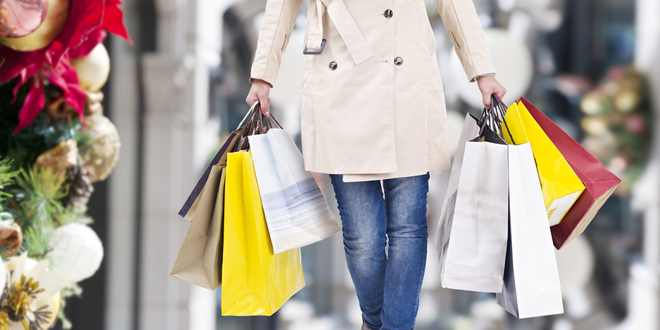
Two of the nation’s largest retail trade organizations are making lukewarm predictions regarding the upcoming holiday season and how much U.S. consumers are likely to spend, amid concerns about tariffs, inflation and a slowing job market.
Shoppers will spend an average of $890.49 per person on Christmas, Hanukkah or Kwanza this year, whether it be gifts, food, decoration or other seasonal items, according to the National Retail Federation in Washington, D.C.
That is the second-highest spending-per-person forecast in the 23-year history of the survey, but it’s not quite as optimistic it might seem. If that prediction is correct, it will be 1.3 percent less than last year’s per-person-spending average $989.90, which was a record.
Of that, $627.93 will be spent on gifts for family and friends, while the remaining $262.56 will be used for seasonal items: food or candy, decorations and greeting cards.
“Time and again, Americans prioritize spending on loved ones during the holidays despite economic uncertainty,” said Katherine Cullen, the retail federation’s vice president of industry and consumer insights, in a statement. “With more consumers planning to seek out sale events this year, retailers are prepared to deliver on deals, and value, to ensure consumers have everything they need to make the holiday special.”
Ninety one percent of the adults surveyed said they plan to celebrate the holidays this year, about the same as 2024.
“Despite consumers’ economic concerns, the winter holidays remain an important occasion to celebrate with loved ones,” said Phil Rist, executive vice president of strategy with Prosper Insight & Analytics, the Ohio marketing firm that gathered the data for the federation’s forecast. “This is particularly true for those families with children, who are expected to increase their gift budgets by more than $30 on average.”
Not long ago the regional shopping mall was the most popular place for holiday purchases, but those days are gone. The internet is now the number one destination: 55 percent of those surveyed told Prosper Insight said they plan to make online purchases this year. Forty six percent said they plan to do some holiday shopping this year at a grocery store, 44 percent at a department store and 42 percent at discount store.
Forty two percent of those interviewed said they expect to start shopping – or at least start browsing – before November, reaffirming that early-Christmas shopping remains poplar with a large number of consumers.
As for why so many people prefer to shop early, 41 percent said they do it to avoid the stress of last-minute shopping, and 54 percent said they want to take some strain off of their budget by spreading out their holiday shopping bills.
But 63 percent said they plan to wait until Thanksgiving weekend to do most of their holiday shopping, up four percent from 2024.
Tariffs remain a prime concern for many consumers: 85 percent of they expect the Trump Administration’s taxes on some imported goods – which it maintains are needed to make the United States more competitive in the global marketplace – to go up during the next few months.
Compared with the retail federation, the International Council of Shopping Centers in Washington, D.C. is downright optimistic. It expects U.S consumers to spend $1.7 trillion on holiday gifts and accessories this year, a 3.5 to four percent increase if it happens.
Two hundred and forty three million consumers – 91 percent, same as the retail federation – told the council they plan to shop for holiday gifts this year. Discount department stores (63 percent) and traditional department stores (29 percent) remain the most popular shopping destinations, and gift cards remain the most popular gift: 64 percent of those interviewed say they will buy at least one this year, a six percent increase year-over-year.
Retailers will probably remember 2025 as a good, but not great, holiday season, because consumers will almost certainly be cautious with their spending, said Robert Kleinhenz, a Long Beach-based private economic consultant.
“From the national perspective, there seems to be a lot of uncertainty about where the economy is headed, although it’s safe to say that it’s slowing down,” Kleinhenz said. “People are worried about tariffs and job growth has almost ground to a halt at the national level. I think the retail federation’s prediction of a 1.3 percent decline in personal spending will end up being accurate.”
Kleinhenz noted that Deloitte, a global auditing, consulting, and financial advisory firm based in London, is predicting a 10 percent drop in personal spending this year, along with overall sales of $1.6 trillion, and a year-over-year sales increase of 2.9 to 3.4 percent.
The differences in the three forecasts says much about the state of the economy.
“We have forecasts that are all over the place, which tells me there’s a heightened level of uncertainty about the direction of the economy and the health of the consumer,” Kleinhenz. said. “We’re going to be flat or down, and if we see growth it will be in the low single digits.”
Holiday spending in the Inland Empire will probably mirror national spending, and may lag behind it.
“There are some things about the Inland Empire economy that I’m concerned about,” Kleihenz said. “Job creation is only happening in healthcare, government and logistics. Most other industries aren’t adding jobs, but they aren’t cutting jobs, either.”
Given those factors, Inland Empire consumers are likely to be more cautious with their holiday spending than they’ve been in past years.
“We have numbers that tell us consumers are stressed, and 70 percent of the economy is driven by consumers,” Kleinhenz said. “It’s going to be a very tight Christmas.”
Holiday spending often mirrors spending during the previous 10 months, which is why Ontario Mills expects a solid holiday season, said Amanda Shewan, the Mills’ director of marketing and business development.
“We are very optimistic,” Shewan said in an email. “Our outlook is strong, based on the strength we’ve seen in consumer spending and traffic throughout the year. We expect to see aggressive sales and more shoppers than last year.”