 IE Business Daily Business news for the Inland Empire.

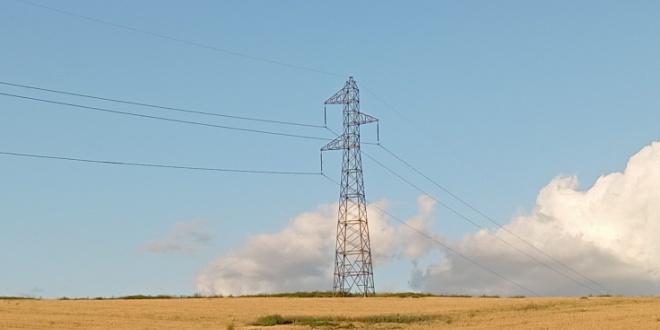
The effort to stop San Diego Gas & Electric’s proposed Golden Pacific Powerlink Project, a 145-mile high-voltage power line that would cut through the heart of Temecula, appears to be gaining momentum.
About 130 people attended the Sept. 17 meeting of the California Public Utilities Commission at San Marcos City Hall to show their opposition, said Mark Winkler, president of Save Temecula, a citizens group that is working to keep Powerlink from being built.
All spoke against the project, including four members of the Temecula City Council, Temecula City Manager Aaron Adams, and Assemblywoman Kate Sanchez, R-Santa Margarita, whose district includes Temecula.
What made that turnout noteworthy was that Powerlink was not on the agenda placed before the five commissioners.
“To get a turnout like that when the issue isn’t on the agenda is amazing, especially when you consider that the meeting started at 11 a.m, when people are still at work, and lasted four hours,” Winkler said. “Our people heard about the meeting and decided to attend.
“I think it sends a clear message to San Diego G&E that they’re in a lot of trouble?
Plans call for the power lines, some of which would reach as high as 200 feet, to run from the Imperial Valley to Orange County. The $1.6 billion project is needed to reduce grid congestion and strengthen the state’s power system, according to utilities commission, claims Winkler and Save Temecula dispute
Winkler recently spoke with IE Business Daily about how Save Temecula got started, the damage the project could cause to Temecula and the other communities in its path,
Q: How was Save Temecula formed, and how you became its president?
MW: It started when we filed for a 501(c)(3) status in June. That was right after San Diego G&E approached the city to tell them what was going on, which very late in the game. The city was caught off guard. The utility could have brought the city into the planning process, but it didn’t. That was unfortunate. The city council held its first meeting on the project on May 26.
Q: So if the utilities commission says no, that will be the end of it?
MW: Yes, it would be over, and that could happen. They could say it’s too expensive, which it could be. A project very similar to this one was filed about 18 years ago, and it never happened.
Q: What was that project like?
MW: It was 117 miles, This one is 145 miles. The cost was going to be a massive hit to rate payers, because the utility would have passed along the cost, just like it’s planning to do now.
Q: Why not come up with another route?
MW: Because they have no incentive to use alternative routes or alternative technologies. It’s really the opposite, because they won’t make as much money if they do that.
Q: What do you think the utilities commission will decide?
MW: I can’t speak on their behalf, but I know there are codes that the commission has established, and they have to follow them. I would be shocked if the project is approved, because it doesn’t conform to those codes. It conflict with them.
Q: Are you adding members to Save Temecula?
MW: Yes we are. We have hundreds of people that show up at events. There are people who are devoting all of their time to this issue. I know it’s become a full-time job for me. We’re all working for free and we have people who are donating money, because we’ll need to pay for legal services and expert testimony.
Q: What will happen to Temecula if PowerLink is built?
MW: it would devastate the city and it’s economy. You have potential fire issues, because they want to build it in a wind tunnel. It would run about three miles from the Elsinore Fault Zone, one of the most most active earthquake faults in Southern California. It will also run along land the Pechanga tribe considers sacred.
Q: How much of a fire hazard do you think the project would be for Temecula?
MW: It would trap 15,000 people on an island, because we have limited evacuation corridors. The only avenue out of town is to the north, and that’s where the towers will be. If a tower collapsed, it would block 15,000 people.
Q: What about property values?
MW: It would be very detrimental. Any homes that are located along a transmission line as long as this one will lose a lot of their value. Getting fire insurance would be very expensive, and that would put financial pressure on the people who are already being asked to pay for the transmission line.
Q: Is there anything in this for Temecula?
MW: No, there is no direct benefit forTemecula. It’s placing a very large extension cord through the middle of our city, to bring in power from the Imperial Valley.
Q: What is your strategy? How do you plan to stop this project?
MW: Common sense. if people just looked at this project from that perspective there’s no way it would happen. It’s bad that we’re even at this point. I don’t think anyone at San Diego G&E would propose putting something like this in the community they live in.
Q: Are you prepared to go to court? That’s how these things are often resolved.
MW: We will pursue this through the appropriate legal route. We plan on bringing in expert witnesses to talk about alternative routes, and alternative technologies that would put less of a burden on the rate payer. Remember that this is a regional issue. It doesn’t just impact Temecula.
Q: What is the utilities commission’s role in all of this?
MW: It has to look at alternative routes. Is there a less damaging way of growing the power system in California? We aren’t against addressing power needs, but we are saying there are ways to do it through new technology and alternative routes. There are routes that are more efficient and that wouldn’t have the negative impact on the local economy that the planned route would,
Q: So you aren’t going to argue against the project? You’re going argue that are better ways to develop it?
MW: Yes, and San Diego G&E is well aware of that.
Q: Wasn’t their position is that there are no alternative routes that will work?
MW: They won’t consider any alternative routes because they will make more money building it the way they’ve proposed building it.
Q: Your hope is to win this battle before the utilities commission, but if you don’t, are you prepared to to go to court?
MW: Yes, we are. There are also different groups forming, My guess is they will do everything possible to ensure that this project doesn’t happen as it’s currently planned.
Q: Do you feel like the city is behind you?
MW: One hundred percent. Temecula is a well-run city, and it’s one of the few cities in Riverside County that is debt free. That will give it the funds to help fight this thing.
The city been very vocal in their opposition, and so has Riverside County. The board of supervisor has voted against it. So have some of the water districts and school districts. Being against this project is just common sense.
Q: But do you have enough money to file a lawsuit and go to court?
MW: So far, we’ve raised about $50,000. That’s enough to get a legal retainer.
We will probably need more than that, but it’s a good start. And if this does go to court, I don’t think it will be there very long.
Q: Do you think you will succeed?
I’m an optimist, and I think that when the utilities commission looks at this project, if it follows its own codes, there’s no way it gets approved. It doesn’t exist to rubber stamp projects, it exists to strike a balance.
Q: Are you in this for the long haul?
MW: As long as I’m alive on this earth, I’ll be fighting this project, if I have to.