 IE Business Daily Business news for the Inland Empire.

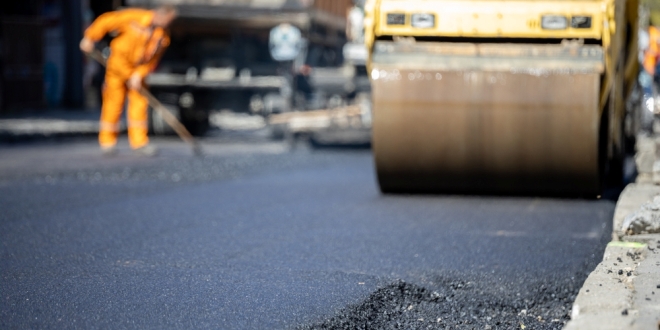
Riverside County voters will decide whether to preserve a half-cent sales tax that has helped pay for transportation projects and infrastructure repairs in the county for nearly 30 years.
If approved Nov. 3, Measure A will continue to provide much-needed funding for streets and roads, regional transportation upgrades, and public transportation, according to the Riverside County Transportation Commission.
If voters say no to Measure A, it will expire in March 2039, and the county could eventually face serious transportation funds issues.
“If Measure A isn’t renewed, I don’t think things wouldn’t grind to a halt, but a lot of funding would be lost,” said Raymond Gregory, commission chairman. “A lot of projects would lose momentum, and it would be difficult to keep them going.
First passed in 1988 and renewed in 2002, Measure A has to date raised more than $3.1 billion, according to the commission. It’s expected to generate about $280 million a year, a revenue source that would go away only if Measure A is repealed by the voters.
Since 2009, Measure A has generated more than $955 million for road repairs, streets projects, and regional connections. Larger allotments include unincorporated parts of the county ($137 million), Riverside ($126.3 million), Moreno Valley ($70 million) and Palm Desert ($45.7 million).
On the lower end, Indian Wells received $4.2 million, while Canyon Lake and Calimesa accepted $3.2 million and $3.1 million, respectively.
“Local funding matters because it stays in Riverside County,” said Aaron Hake, the commission’s executive director, in a statement. “That allows our communities to address local transportation priorities, bring additional state and federal transportation dollars into Riverside County, and deliver projects (to) the public.”
Virtually every Riverside County city has streets and roads that need to be repaired, and Measure A accounts for much of that work.
Measure A-generated revenue keeps the county’s nine public transit service providers, and 18 community-based service operators running. It also helps pay for Metrolink, the high-speed rail system that connects the Inland Empire to Los Angeles.
Perhaps most important of all, the county relies on Measure A to help pay the matching funds needed to obtain state and federal grants. Without that, a lot of projects would stall or never get off the ground,
“That really amplifies the importance of Measure A,” Gregory said. “It’s our only source of leverage for outside grants.”
For at least the next 13 years, Measure A will also provide revenue for projects county residents have identified as being important, including upgrades to State Route 91, Interstates 15, 10, and 215, improvements to local streets and roads, and developing better public transportation countywide, Gregory, said.
The commission also hopes Measure A will pay for the proposed Coachella Valley Transit Project, a 144-mile passenger train route that would connect the Coachella Valley with Union Station in downtown Los Angeles.
Plans call for the train to stop in Los Angeles, Orange, San Bernardino and Riverside counties. Station locations, cost of the project, and when construction might begin have not been determined, according to a commission report.
Gregory stressed that Measure A is not a tax increase, it proposes to keep in place a tax that was established nearly 30 years ago, and it will not cost county residents anything more than what they’re paying now.
“This is probably not a good time to ask for a tax increase of any kind,” said Gregory, who is the mayor of Cathedral City. “It’s a tough time for everybody. We wouldn’t expect any tax increase to pass now.”
When county voters approved Measure A, they also approved the Riverside County Transportation Improvement Plan, which spells out precisely how revenue generated by Measure A has to be spent.
The plan divides its investments into three groups: highways and regional corridors, local streets and roads, and public transportation. Updated annually, it identifies and guides funding for local street and road repairs, highway and interchange improvements, and public transportation.
No more than one percent of the funding generated by Measure A is used for administrative salaries and benefits. This year’s version of Measure A includes a citizens oversight committee, something it has never had, and it streamlines some of the funding in western Riverside County, according to Gregory.
Distribution of Measure A revenue is based on audits that are conducted every year, and is limited strictly to transportation projects.
Measure A accounts for only a percentage of Riverside County’s current $937 million transportation budget, which includes state and federal grants, state gas taxes and vehicle fees, and local developer fees.
Even though its expiration date is 13 years away, now is the right time to put the third Measure A extension on the ballot, Gregory believes.
“We expect Measure A to pass because it has public support,” Gregory said. ”People have told us they want the projects we’re working on to happen. Some people have asked us why we’re doing this when the sunset date is 13 years away, but they don’t understand regional transportation planning. Thirteen years is not a long time.”